A special Monday evening reflection | November 16, 2026
I’ve been watching the news lately, and apparently, the technology holding our modern world together has decided to have a bit of a moment.
Microsoft services experienced a major disruption. Then airplanes across the United States were temporarily prevented from taking off because of problems with the FAA’s telecommunications network. People couldn’t access systems they depend on, flights were delayed or canceled, and somewhere, I imagine, a considerable number of IT professionals were having the sort of day that makes them question their career choices.
Naturally, I had questions. Lots of questions. But here’s the thing: I don’t think our first response to every alarming headline needs to be running around shouting that the sky is falling. Before we become Chicken Little, shouldn’t we find out what actually happened?
Because when something goes wrong on that scale, I’m not particularly satisfied with hearing that the problem has been fixed. I want to understand what happened, why it happened, what kept people safe, and whether anyone learned enough from it to prevent something worse.
Two Disruptions, Not One Grand Conspiracy
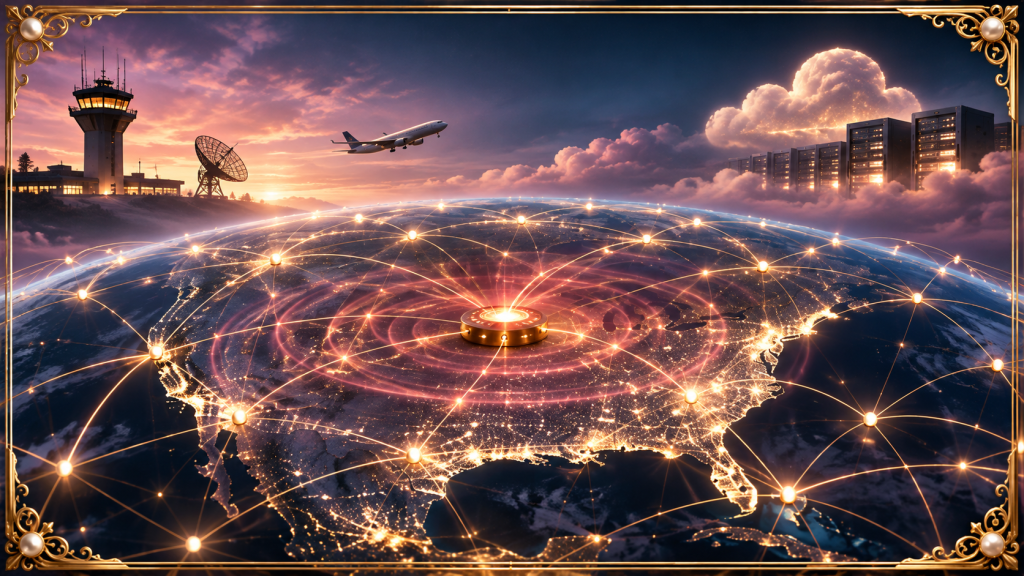
On November 12, Microsoft experienced a major disruption affecting Outlook and other Microsoft 365 services. On November 13, the Federal Aviation Administration issued a nationwide ground stop after technical problems created instability in communications and radar data.
Two enormous disruptions involving very different systems within roughly a day of each other. That certainly got my attention.
Initially, I wondered whether the problems might have something in common: overwhelmed systems, an unexpected surge of data, or a small change somewhere that created a bottleneck nobody anticipated. Not necessarily an attack. Not necessarily anything malicious. Just something that starts small and becomes enormous because other things depend on it.
That is a question worth asking. It is not proof that the incidents were connected. The available investigations have identified different technical problems, and the FAA has not identified a cyberattack as the cause of its ground stop. Similar patterns do not automatically mean a shared culprit.
We can be curious without becoming alarmists. In fact, I think curiosity works much better when we leave room for the evidence.
When Everything Depends on Everything Else
We tend to think of technology as a collection of individual systems. Our phones work. Our email works. Our banks work. The airlines work. We open an application, press a button, and expect something to happen. But behind that button is an extraordinary collection of equipment, software, networks, and people, all depending on one another.
When everything works, we barely notice. When something breaks, suddenly the entire world notices. And sometimes what looks like a gigantic collapse begins with a remarkably ordinary technical problem.
What the Investigations Actually Found
In its November 15 explanation, the FAA said older telecommunications equipment became unstable when its network was flooded with roughly 1,000 connection attempts every four to five seconds. Investigators identified two possible originating sites, including one where a new router had been installed. Blocking those sources stabilized the network, and officials disabled similar functionality on other routers as a precaution while continuing to investigate the root cause.
The Microsoft problem was different. Microsoft’s preliminary post-incident findings described a software defect introduced months earlier, an increase in traffic, and reduced available capacity. As servers became unresponsive, other servers received more work and some failed too. Engineers restored service, and Microsoft identified safeguards and capacity improvements to make a similar chain reaction less likely.
I find that fascinating. An older network that struggled under an unexpected flood of connection attempts. A modern network where several conditions combined to expose a defect that had remained hidden for months. Different circumstances, but both show why complex systems need layers of protection.
A problem can be real and serious without being evidence of sabotage. And it can be worth fixing without becoming a reason to panic.
Something Important Worked
Here’s the part I wish more people would notice when discussing the airline disruption: the FAA didn’t simply shrug and let the situation play out. It stopped departures as a safety precaution. Some radio frequencies and radar feeds remained functional; pilots and air traffic controllers followed established procedures; and, according to the FAA, every aircraft landed safely.
Now, the disruption was a tremendous inconvenience, and it deserves serious attention. But a ground stop in a situation like this is not automatically proof that aviation safety failed. It can be evidence that the safety process was activated when needed.
There is a difference between a system encountering a problem and every safeguard in that system failing. Sometimes the safeguard is the very reason the story ends with frustrated travelers instead of something tragic.
And I think that’s an important distinction, especially when frightening headlines are traveling faster than the explanations.
The Real Test Comes After Everything Works Again
Here’s the question that has stayed with me: Will they use what happened to make their systems stronger?
After major failures, engineers often conduct a post-incident review. What broke? Why did it break? What helped recovery? What safeguards worked? What should have prevented the problem? More importantly, which improvements will actually be made?
Writing down those answers is only the beginning. Someone has to make the changes, test them, and prioritize reliability even when the immediate crisis has passed. It’s easy to justify fixing something that’s broken today. It’s harder to justify investing in protection against something that might fail five years from now.
Until five years from now arrives. Then everyone wishes they’d done it sooner.
I especially appreciate the idea behind blameless postmortems in site reliability engineering. The goal isn’t to find one person to embarrass. It’s to understand the conditions that allowed the problem and improve the system. Blame may satisfy our emotions for a moment, but learning can make the next incident less dangerous.
Please Don’t Mistake Preparedness for Panic
This is really what I want readers to take away. We don’t need to wring our hands over every technological failure, and we don’t need to invent a frightening explanation before the people investigating have finished their work. We can pay attention, be reasonably prepared for interruptions, and hold the responsible organizations accountable for improving their systems.
Being prepared doesn’t mean believing catastrophe is around every corner. It means accepting that equipment and software sometimes fail, understanding why backups and safety procedures matter, and making thoughtful improvements.
I can’t promise there will never be another disruption, and neither can any honest engineer. What I hope is that each one teaches us something useful. A technical incident isn’t automatically a warning that the world is ending. It can also be a chance to discover a weakness before it contributes to something worse.
Of course we should ask difficult questions. Of course there should be investigations, transparency, and follow-through. But questions are not the same as conclusions, and concern isn’t the same as panic.
Nobody Sees the Disaster That Didn’t Happen
I’ve been thinking about how strange successful prevention really is. There are no dramatic headlines announcing that an aging system was upgraded just in time, or that a backup worked exactly as designed when it was needed. Nobody sees the failure that never happened.
Everything simply keeps working. And maybe that’s the greatest achievement of all.
So the next time the world’s technology has one of its little tantrums, I’ll probably do what I always do: ask questions. Lots of them. I’ll also try to remember the people working the problem, the safeguards that kept a bad situation from becoming worse, and the difference between what we suspect and what we actually know.
The sky isn’t falling every time a server falls over. Sometimes a server has simply fallen over. Let’s fix it, find out why, and see what we can learn before the next one tips.
Are you kidding me? Maybe. Maybe not.
But I would much rather learn from a little glitch today than discover tomorrow that we ignored a lesson we had the chance to understand.
Until next time, may we remain curious enough to ask why, calm enough to wait for evidence, and wise enough to prepare for what we cannot yet see.
Are You Kidding Me? | Special Evening Reflection
Sources and a Note on What We Know
This article reflects public information available on November 16, 2026. The FAA’s investigation and Microsoft’s post-incident analysis may be updated as engineers complete their work. The two incidents have not been shown to share a cause. This is a reflection on resilience and preparedness, not an allegation of a coordinated attack.
FAA — Nationwide Ground Stop: Questions and Answers (Nov. 15)
BleepingComputer — Microsoft’s preliminary explanation (Nov. 16)
Google Site Reliability Engineering — Postmortem Culture
Behind this post: Inspired by a conversation about the November technology disruptions, overwhelmed networks, and the importance of learning from failures instead of rushing to frightening conclusions. The questions and views are mine; publicly reported incident details and source links were checked before publication. Original featured artwork was created for AYKM.


Leave a Reply